They did not all wear crowns. Some wore rags. Some wore silence. They lived in different lands, under different skies, speaking different tongues.
Some were known. Many were not. They did not seek to be remembered. They sought to be faithful.
They walked through wars and plagues, through injustice and fear, through poverty and power.
Some preached in public squares. Others whispered in rooms of suffering.
They carried no single doctrine, but one flame. A Light that healed. A Light that resisted cruelty. A Light that refused hatred.
They stood where systems failed, where people were forgotten, where hope was thin.
They fed the hungry. They taught the young. They confronted kings. They comforted the broken.
Some were saints. Some were rebels. Some were artists. Some were prisoners.
They did not agree on everything. But they recognized the same truth: love is stronger than fear.
This page remembers them not as idols, but as witnesses.
Because the Light they carried did not end with them. It waits to be recognized again.
They walked with the Light Himself. Chosen not for their strength, but for their surrender. Fishermen, tax collectors, doubters — turned into messengers of eternity. They fell, rose, and carried the fire that changed the world. They are not myth, not legend — but the first witnesses of divine Light.
They called him the Rock. But before he stood strong, he fell hard. Peter was not chosen for perfection, but for a heart that could break, weep, and still return to the Light.
Peter was not born a saint — he was a fisherman, quick to speak, quick to act, full of fire. When Jesus called him, he dropped his nets — not because he understood everything, but because something in that Voice broke his heart open.
He promised to stay faithful, even to die if he must. But when the storm of fear came, his courage failed. Three times he denied knowing Him, and when the rooster crowed, the Rock broke.
He ran into the night, weeping bitterly. Yet from that breaking, his true calling was born. God does not build on pride — but on surrender.
He was called the disciple whom Jesus loved — not because he was greater, but because he had learned how to rest his head upon the Heart of the Master.
When others sought power, John sought presence. When they argued who would be first, he listened only for the sound of Love breathing.
In that closeness, a door opened — not one of flesh or time, but of Spirit. Through that door he saw what no eyes could see: the Word before words, the Light before light, the Lamb before the world began.
He stood at the cross while others ran. He spoke little, for silence had become his teacher. He watched the blood fall to the ground, and in that crimson river, he saw eternity flowing.
Years later, when exiled to Patmos, the heavens opened again — not as reward, but as remembrance. He saw thrones, living creatures, stars falling and rising, and One whose face shone like the sun in its full strength.
Yet what he truly saw was not destruction, but restoration. The world’s end was not death, but birth. The veil was not punishment, but protection — so that Love could finish its work unseen.
John returned from that vision with eyes that no longer wept. He wrote not to impress, but to remind: “In the beginning was the Word, and the Word was with God, and the Word was God.”
He had seen beyond the veil, and what he saw was not chaos — but a Kingdom built of Light, where the Lamb still walks among His children.
John is called the Beloved because he dared to look deeper — not at what ends, but at what remains. And even now, those who walk in stillness, those who rest upon the Heart of Love, will see what John saw: a world reborn through Light.
He was not the strongest among them, nor the loudest voice in the crowd. James was quiet — his strength was in obedience, his courage was in surrender. He understood early that following the Light was not a path of crowns, but a path of crosses.
When the others spoke of glory, James spoke of grace. When they dreamed of thrones, he dreamed of mercy. He was the first to understand that obedience is not weakness, but a deeper form of strength.
When his time came, he did not run. He bowed his head and whispered the words he had once heard in a garden: “Not my will, but Yours.” The sword fell, and the heavens trembled — not in defeat, but in recognition.
For the death of James was not an ending, but the opening of a door. He became the first among them to pass through the veil, the first to see the other side, the first to rise in glory.
And from that realm of living Light, his witness still echoes: “Do not fear the death of the body, for only pride truly dies. The spirit that loves cannot be buried — it ascends.”
He died first, but he rose first — a sign to all who serve in silence that obedience opens eternity.
He had seen the miracles and walked beside the Truth, yet when darkness fell, his heart trembled. Thomas was not faithless — he was honest. He could not pretend to believe what his hands had not yet touched.
Thomas had walked the same roads, heard the same words, and witnessed the same wonders as the others. Yet when the cross rose and hope seemed to die, something within him broke — not his love, but his certainty.
When the others said, “We have seen the Lord,” Thomas did not mock their joy. He listened, and then spoke from wounded truth: “Unless I see the mark of the nails, unless I place my hand in His side, I cannot say it is real.”
These were not words of rebellion, but of longing. Thomas was asking for a faith that could stand in the light of truth, not one borrowed from another’s eyes.
Eight days passed in silence and waiting. Then, without a door opening, the Light entered the room. Peace filled the air, and the familiar Voice said, “Peace be with you.”
He sat at the table of numbers, counting coins that never filled his soul. Every clang of silver echoed like a reminder of how far he had drifted from grace. Matthew was rich in money, but poor in peace.
Day after day, Matthew watched people pass his booth. Some turned their faces away. Others spat near his feet. “Traitor,” they whispered. He learned to wear a smile like armor, but beneath it lived a man already broken.
He knew the Law. He knew the prayers. And he knew how far he had fallen from them. Each coin he collected bought him comfort, but robbed him of belonging. He was surrounded by numbers, yet counted by no one.
Then one ordinary day, a Presence stopped beside his table. The crowd did not fall silent — but something inside Matthew did. The Voice was not loud. It carried no accusation. It simply said, “Follow Me.”
No lecture. No demand. No reminder of his past. Just an invitation strong enough to quiet years of guilt and gold. In that moment, Matthew understood something impossible: he was still seen.
Without bargaining, without delay, he stood up. He left the table. He left the coins. He left the life that had defined him. What he carried away was lighter — and yet worth more than everything he abandoned.
From that day forward, Matthew no longer counted money. He counted moments. Words spoken in compassion. Hands laid on the sick. Eyes opened. Hearts restored.
He wrote carefully, faithfully, as one who knew what mercy truly costs. Each teaching, each healing, each act of love became a treasure — pearls gathered not for himself, but for the Kingdom of Heaven.
The man once known for taking became the one who gave the world the Gospel of Grace. His past was not erased — it was redeemed.
He was not the loudest among them, nor the one who sought attention or praise. Andrew walked quietly, yet every step he took carried unseen purpose. His strength was not in speech, but in noticing hearts others overlooked.
While others debated greatness and measured their place among men, Andrew listened. He heard unspoken fears, noticed trembling hands, and sensed longing in quiet eyes. His heart leaned toward the broken, not the spotlight.
When others waited for signs and demanded certainty, Andrew chose trust. He did not need to understand everything — it was enough to know that the Light before him was true. Faith, for Andrew, was not an argument, but a simple, steady yes.
He was the first to follow the Master. And before he spoke to crowds or performed any great act, he did something small — yet eternal. He went and found his brother.
“We have found the Messiah,” he said simply, and brought Peter to Jesus. No sermon. No persuasion. Just love expressed through action. That quiet decision would echo through history, shaping the faith of nations.
Andrew did not strive to be remembered. His joy was found in seeing others encounter the Light that had changed his own heart. If someone else shone brighter, Andrew stood content in the shadows.
Later, when a great crowd gathered, hungry and restless, and the disciples saw only impossibility, Andrew noticed a small boy. Five loaves. Two fish. Hardly enough for anything — except faith.
Andrew did not claim the miracle. He did not exaggerate the offering. He simply brought what was small to the One who was infinite. He trusted completely — and Heaven responded with abundance.
He lived without noise or acclaim. No throne. No monument. Yet every quiet step he took became a sermon of its own. For not all heroes stand on mountains — some walk faithfully in the valleys, guiding others toward the Light.
He was not remembered for miracles, nor for thunderous words or prophecy. Philip’s gift was quieter — a heart that longed to understand, and a soul unafraid to ask.
While others followed Jesus with bold declarations and certainty, Philip followed with questions. Not questions born of resistance, but of longing. He wanted to know not only what was true — but why it was true.
Philip listened carefully. He watched intently. He carried the weight of wonder in his heart. Every teaching stirred something deeper, every sign pointed beyond itself. He sensed that behind the Light stood a greater Source, waiting to be revealed.
And so one day, with the humility of a seeker, Philip spoke the words many carried silently: “Lord, show us the Father, and it will be enough for us.”
It was not doubt that spoke — it was hunger. A holy thirst to see the Origin, the Heart behind the miracles, the Face behind the voice.
Jesus did not rebuke him. He did not dismiss the question. Instead, He answered gently, with words that shifted eternity: “Whoever has seen Me, has seen the Father.”
In that moment, Philip’s searching found its center. All the wisdom he had sought, all the mystery he had chased, was standing before him — not as theory, but as living Love.
He was quiet even among the quiet ones. Bartholomew did not draw attention, nor did he seek to be noticed. His strength lived deeper — in the clarity of a soul that refused to wear masks.
While others debated greatness and measured themselves against one another, Bartholomew remained still. He listened more than he spoke, watched more than he judged. His presence carried a calm that did not need explanation.
When Jesus looked upon him, He did not speak of power or future deeds. He spoke of truth: “Here is a man in whom there is no deceit.” It was not praise meant to elevate, but recognition of a heart already aligned.
Purity, for Bartholomew, was not perfection. It was honesty lived without performance. He did not pretend to be more righteous than others, nor did he diminish the work God had done in him. He walked as he was — transparent before Heaven.
This clarity made him radiant. Not with spectacle, but with peace. When he entered a home, conversations softened. Hearts rested. People felt safe — not because he impressed them, but because he was real.
When Bartholomew preached, his words were few. He trusted that truth, when spoken without mixture, carries its own authority. He needed no symbols, no outward signs, no force to convince.
He carried no weapon, no wealth, no title. Only clean hands and a faithful heart. The world rarely notices such souls — but Heaven never forgets them.
In his final days, when persecution closed in and pain surrounded him, it was said that his face still shone with serenity. Even as his body was broken, his spirit remained untouched — clear as light on still water.
Bartholomew’s legacy is not written in miracles, but in presence. He taught that holiness is not found in noise or display, but in staying true when the world is not.
And through his life, the Father still whispers: “Blessed are the pure in heart, for they shall see Me.”
He once carried the fire of rebellion in his heart. Simon had seen too much injustice to remain silent. His hands were ready for battle, his eyes burning with a dream of freedom. He believed change could only come through force.
Simon was known as the Zealot — the one who would not bow to Rome, the one who marched with the restless, the angry, the forgotten. He believed God’s kingdom would arrive with thunder, that justice would only come when oppressors trembled.
His faith was fierce. His prayers were sharp. He carried Scripture in his mind and fire in his veins. To Simon, righteousness meant resistance, and obedience meant uprising.
Then he met Jesus. And everything he thought he understood was turned upside down.
The Teacher did not raise a fist. He carried no blade. Instead of commanding armies, He knelt with a towel and washed the dust from weary feet.
Simon watched in silence. Something in him broke — and healed at the same time. For the first time, he saw a strength greater than violence: the strength of mercy.
The fire in Simon did not die. It was purified. The passion that once burned for war became a flame for peace. He still fought — but not against flesh and blood.
His new battle was deeper: against hatred, against pride, against fear. He learned that forgiveness is not weakness, but courage refined.
Simon discovered that the truest revolution is not won with steel, but with love. That the loudest victory is a quiet heart filled with God.
He remained a warrior — but his weapons were changed. Patience replaced rage. Compassion replaced fury. Peace replaced revenge.
And so the rebel became a witness: proof that even the fiercest heart can be transformed, and that peace is not the absence of struggle, but the presence of God within a surrendered soul.
He was rarely spoken of, often confused with others, and almost forgotten by name. Yet within Thaddeus burned a flame that never sought recognition — only faithfulness.
Thaddeus, also called Jude, lived in the quiet spaces between louder voices. He did not compete for attention, nor did he seek to stand out. His faith burned steadily, like an oil lamp that does not flicker even when the night grows long.
Among the disciples, he was not the one remembered for miracles, speeches, or bold declarations. Yet he listened deeply. And when he spoke, his words carried weight — shaped by reflection, not impulse.
Once, with sincere humility, he asked a question that revealed his heart: “Lord, why will You reveal Yourself to us, and not to the world?” It was not a question of doubt, but of care — a longing to understand how love could reach everyone.
Jesus answered him gently, speaking of love, obedience, and dwelling within the heart. In that answer, Thaddeus learned that God does not force Himself upon the world — He reveals Himself to those who are willing to receive Him.
After the resurrection, while others were remembered and named, Thaddeus went quietly to forgotten places. He carried the flame into regions where faith was fragile, where hope had been worn thin.
He preached not with thunder, but with perseverance. His life became his message. Where he walked, communities formed. Where he stayed, hearts strengthened.
History did not preserve many details of his labor. No monuments bear his name. Yet Heaven remembers every step. For the Kingdom is not built only by those who shine brightly, but by those who burn steadily until the end.
Thaddeus reminds us that faithfulness does not need applause. That a quiet flame can illuminate generations. And that God never forgets the ones the world overlooks.
He stood in the shadow of louder names, known simply as “the Less.” Not because he mattered less, but because he chose a quieter path. James watched more than he spoke, and believed more deeply than he ever declared.
James the Less lived without urgency to be seen. While others were remembered for sermons or miracles, he carried the faith into the unnoticed spaces — into daily obedience, quiet endurance, and steady devotion.
He listened closely to every teaching, storing truth within his heart like seed in good soil. He did not interrupt, did not compete, did not argue for position. His strength was patience.
When Jesus spoke of the Kingdom, James understood that greatness was not measured by visibility, but by faithfulness. He believed that God works most deeply where applause is absent.
After the resurrection, James remained. While others traveled far, he guarded the core — the community, the prayer, the fragile beginnings of the Church. He became a pillar not by force, but by consistency.
Tradition remembers him as a man of prayer, known for knees worn by long hours before God. His life became a living testimony that endurance itself is a form of worship.
He did not demand answers. He trusted timing. He did not chase recognition. He served quietly, believing that God sees what the world overlooks.
He was not chosen by applause, nor lifted by reputation. Matthias stood quietly among the faithful, unseen by crowds, yet fully seen by God. His calling arrived not through noise, but through prayer.
Matthias had walked with the followers from the early days. He had listened to the teachings, witnessed the healings, and carried the sorrow of the cross alongside the others. Yet his name remained unspoken, his service unnoticed.
He did not compete for position. He did not step forward to be counted. His faith was proven not by visibility, but by endurance. He remained when many left, trusted when understanding was thin, and prayed when words failed.
After the loss of Judas, the community stood at a fragile crossing. Decisions could not be made by ambition. So they prayed. They asked God to choose the one whose heart was already prepared.
The lot fell to Matthias — not as a surprise to Heaven, but as confirmation to men. He was chosen not because he was known, but because he was faithful. Not because he sought the role, but because he was ready to carry it.
Matthias accepted the calling without ceremony. No speech marked the moment. No record preserves his reaction. He simply stepped into the place prepared for him.
From that day forward, he served as he always had — quietly, steadily, without drawing attention. His life became a reminder that God often entrusts great responsibility to those who never ask for it.
History speaks little of Matthias. No long sermons. No dramatic scenes. Yet Heaven remembers the unseen obedience that carried the early Church forward.
Matthias teaches us that calling does not require recognition, and destiny does not need an audience. What is chosen in prayer is sustained by grace.
Some carried the Light so openly that time itself learned their names. Their lives left marks on nations, their words shaped consciences, their courage became memory.
They were called saints, prophets, teachers, reformers — not because they sought recognition, but because their Light could not be hidden.
History remembers them, yet even they pointed beyond themselves — toward the Source that moved through them.
This is a remembrance of those whose Light stood in plain sight, so that others might find the way.
Before temples of truth were known in many lands, people worshiped what their eyes could see. Yet the Creator did not forget the forgotten. He raised friends of the Light to awaken remembrance.
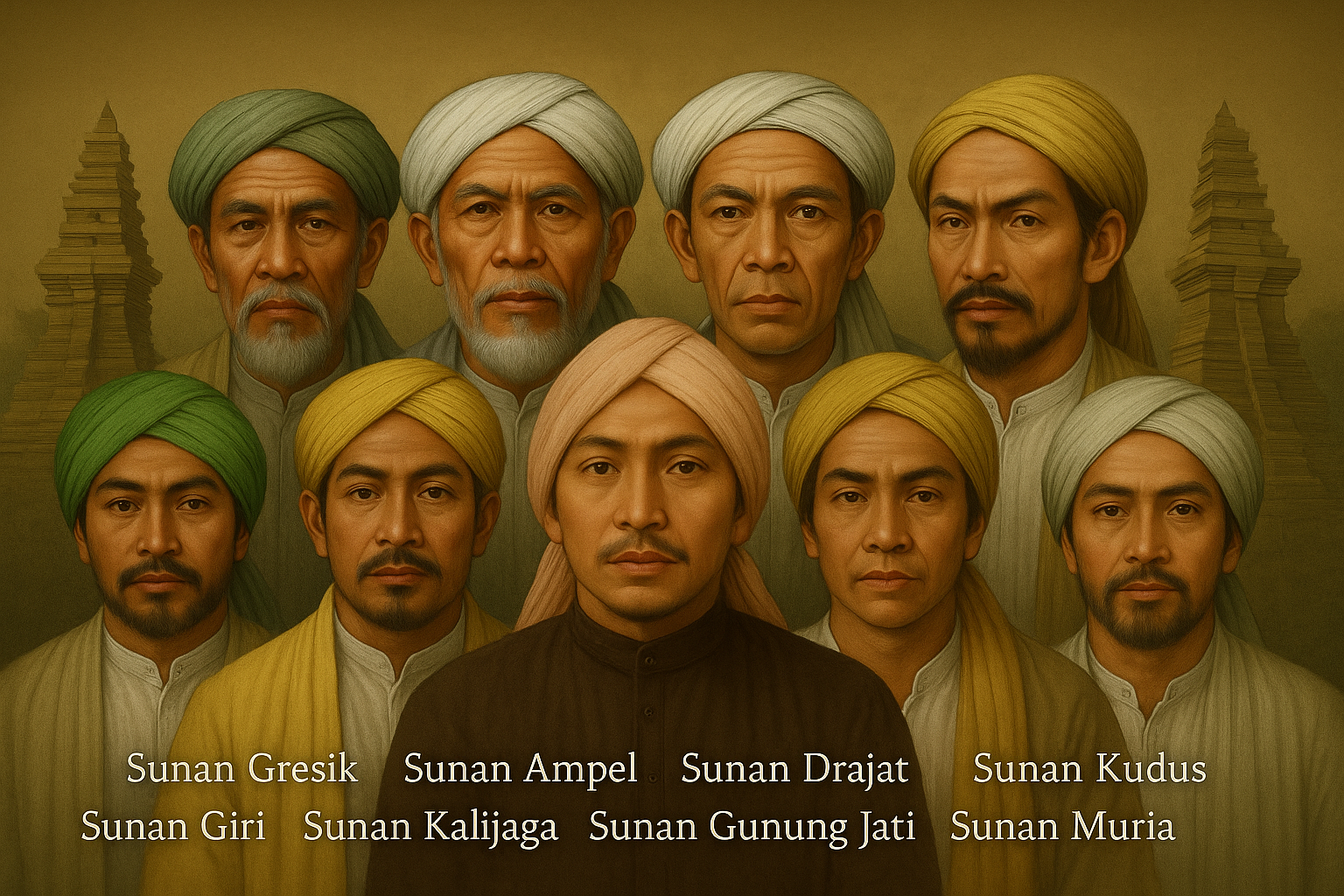
The Origin of the Walis
There was a time when many lands had no law, no guidance, no written rules of right or wrong. There were no churches, no mosques, no temples of truth— only altars built from fear. People worshiped stones, idols, forests, and rivers, offering blood and lives to unseen powers. Darkness spread like smoke across the earth.
Those who sought control used black magic and sorcery. Wisdom was replaced by hunger for power. Hearts grew blind, and the earth trembled beneath corruption.
The Forgotten Lands
Even after Jesus (Isa) walked the earth, and after the Prophet Muhammad ﷺ delivered the final call, many nations remained untouched. The world was vast, divided by deserts and seas. Yet the Creator had not forgotten them.
He said: “Where My name is not known, My Light shall still speak.” So He raised friends of the Light— not prophets, but servants of remembrance.
The Call of Heaven
The One spoke: “Let My friends arise— those who speak not for themselves, but for the Light.” Thus the Walis appeared— born where the night was deepest, sent to rekindle truth within the heart.
The Years of Trial
They lived simply. Some fasted for long seasons, others withdrew into silence. Their bodies weakened, but their spirits burned brighter. They fought darkness not with violence, but with purity.
The Battle Between Light and Magic
Sorcerers ruled nations. Kings sought power through shadows. Yet wherever the Walis walked, idols fell. Their prayers were stronger than spells, their purity more powerful than force.
The Journey Through the Lands of Light
The flame moved through Africa, across deserts and kingdoms. It crossed the sea to India, then flowed eastward toward the islands of the rising sun.
The Journey to the Islands of the Sun
The Light reached Java, where darkness had disguised itself as tradition. Heaven spoke again: “Send nine servants, different in gift, one in spirit.”
The Wali Songo – Nine Gates of Light
Sunan Gresik – The Planter of the Seed
He taught service through work and care for the earth. Feeding others was worship.
Sunan Ampel – The Builder of the School of Light
He founded centers of prayer and learning. Knowledge without humility, he taught, is empty.
Sunan Bonang – The Singer of Heaven
Through music he awakened hearts where words could not reach.
Sunan Giri – The Guardian of Children
He taught faith through joy, not fear.
Sunan Drajat – The Healer of Hearts
He turned belief into compassion and action.
Sunan Kudus – The Peacemaker
He built bridges between old traditions and new truth.
Sunan Muria – The Teacher of the Mountains
He served farmers and villagers in silence and humility.
Sunan Gunung Jati – The Friend of Kings
He reminded rulers that authority without virtue is darkness.
Sunan Kalijaga – The Bridge Between Heaven and Earth
Once broken, later chosen. He revealed truth through art and culture, walking among ordinary people.
The Covenant of Light
When their mission was complete, they prayed for the Light to continue. Heaven replied: “In every generation, in every land, a friend of the Light shall arise.”
From Arabia, through Africa, across India, to the green islands of Java— the river of Light still flows.
He was not rich, nor powerful, nor famous. Yet within him burned a fire no storm could extinguish — a longing to know the One, not through books, but through the soul itself.
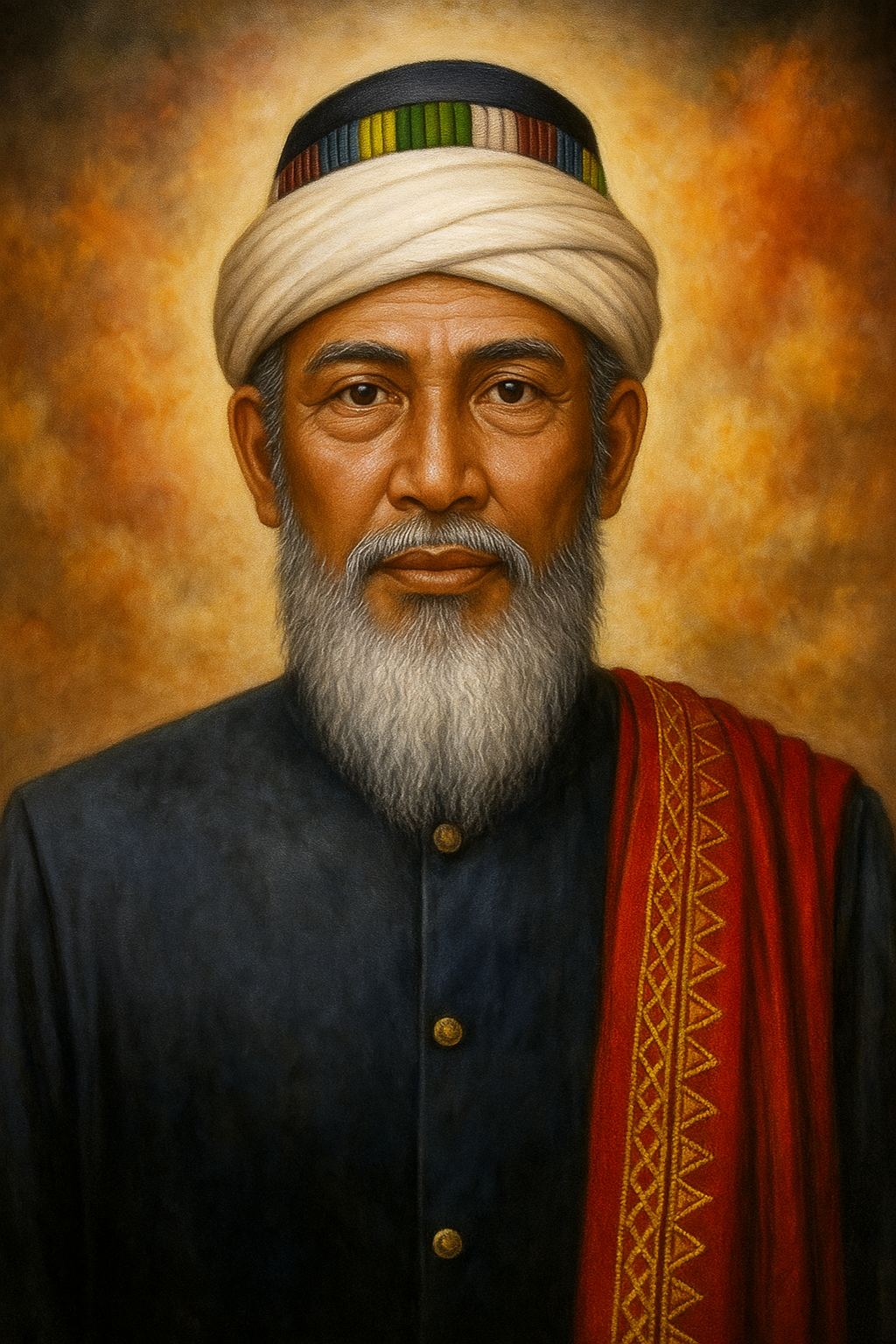
Once, there lived a man by the edge of an ancient kingdom, where the sea kissed the mountains and the sky sang with the rhythm of the waves. His name was Hamzah Fansuri, born in Fansur — where camphor met the salt of the ocean.
From a young age, Hamzah sensed the world was a veil. He saw God in trees, heard Him in waves, and found Him in the stillness of breath.
To him, there was no separation between the visible and the unseen. Everything moved as one breath, one Light, one Love.
He traveled far — from Sumatra to Mecca, from islands of sun to valleys of silence. His pen became worship; his ink, prayer.
“Whoever seeks Me outside will never find Me, for I am the ocean within your tear, the fire in your breath, the silence in your voice.”
His words were misunderstood. Books burned. Names silenced. Yet Truth remained untouched.
The Love of the One cannot be contained by walls, by dogma, or by fear.
Hamzah Fansuri became a voice of Divine Oneness — seeing the ocean in a drop, heaven in a handful of earth.
Founder of Muhammadiyah, he did not seek a religion full of rules, but a faith that awakened the people. He believed that true devotion must become action — light in worship, and mercy in daily life.
In a time when many hearts were trapped between habit and fear, Ahmad Dahlan carried a quiet question within him: “If faith is true, why does it not lift the people?” He watched how religion could become a shell — repeated by the lips, yet distant from the soul. And he longed for something purer: worship that changed the inner man, and knowledge that healed the outer world.
He did not come to tear down devotion, but to cleanse it. Not to mock tradition, but to return it to its original fire: sincerity, discipline, and mercy. He believed the Creator never asked for empty performance, but for a living heart — one that prays, learns, serves, and builds.
Ahmad Dahlan carried reform like a lantern, not like a weapon. He knew that awakening is not forced; it is invited. So he taught patiently, reminding people that faith is not proven by how strict we appear, but by how much truth and compassion we carry.
He saw that ignorance was a shadow that kept people bound — and that education was a doorway to dignity. He wanted children to learn, families to rise, and communities to stand in wisdom. For him, knowledge was not pride — it was responsibility. A lamp meant to be shared.
Out of this vision grew a movement: Muhammadiyah — not as a crown for leaders, but as a path for servants. A way to bring faith into schools, into care for the poor, into clean ethics, into practical love.
He did not dream of fame. He dreamed of awakening. A people who could pray with sincerity, think with clarity, and serve with courage. In his eyes, devotion and progress were not enemies — they were brothers. Faith should lift the mind, soften the heart, and strengthen the hands.
And so he became a reformer — not because he wanted to change religion into something new, but because he wanted to restore what was always meant to be: a light that guides, a mercy that heals, and a truth that frees the human soul.
There was a time when holiness did not live behind stone walls. It walked the streets — through dust, hunger, laughter, and tears — and turned ordinary places into encounters with God.
There was a time when holiness did not live behind stone walls, golden altars, or guarded institutions. It walked the streets. It moved through marketplaces and narrow alleys, through dust, hunger, laughter, and tears.
Saints were not distant figures placed high above ordinary people. They wore sandals. Their feet knew the ground. Their hands carried wounds, bread, medicine, and children. Their prayers were not separated from life — they were woven into it.
Holiness was not measured by titles or applause, but by presence. By staying when leaving would have been easier. By listening when silence was uncomfortable. By serving without being seen.
These were men and women who did not seek to escape the world, but to heal it. They did not claim perfection. They carried weakness, doubt, and suffering — and offered them to God without disguise.
Their holiness was not loud. It did not argue or dominate. It persuaded by mercy. It softened hearts simply by being faithful, day after day, step after step.
Where they walked, the streets themselves became places of encounter. The poor were seen. The sick were touched. The forgotten were remembered. Not because the saints were powerful, but because they allowed God to move through ordinary lives.
This chapter remembers such souls — not to place them on pedestals, but to remind us that holiness is not unreachable. It begins where we stand, when love chooses faithfulness over comfort, and humility over recognition.
Where saints wore sandals, holiness did not retreat from the world. It walked straight into it.
He was a servant, a healer, a soul of mercy. Born in poverty, he swept monastery floors with reverence. Animals came to him. People followed him. But he followed only Christ.
Saint Martin de Porres was born into hardship and obscurity, marked early by poverty and social division. Yet what the world saw as low, Heaven saw as fertile ground. He entered the monastery not as a scholar or leader, but as a servant — assigned to cleaning, caring, and silence.
He swept floors as if they were holy ground. Every task became prayer. Every act of service became an offering. Martin did not separate devotion from duty — for him, humility was worship.
The sick came to him, and were healed. The hungry came, and were fed. Even animals were drawn to his gentleness, sensing no threat, only peace.
He never sought attention. Fame followed him, but he walked ahead of it. When praised, he returned to silence. When admired, he returned to service. His life preached a simple truth: love kneels.
Saint Martin became a sign that holiness does not need a stage. It only needs a heart willing to love without condition.
A shepherd who refused to wait behind walls. He crossed forests and mountains, seeking the people where they lived. He baptized not with pride, but with tears.
Toribio de Mogrovejo was entrusted with authority, yet he chose movement over comfort. Instead of waiting for people to come, he went to them — across rivers, through jungles, over mountains.
He understood that a shepherd does not remain in the city while the flock wanders far away. His feet knew exhaustion, his body knew illness, but his heart knew urgency.
He baptized hundreds of thousands — not as numbers, but as faces. He learned languages, listened to stories, and wept with those who had been neglected. His tears watered the seeds of faith.
Toribio did not preach domination. He preached presence. He believed that dignity begins when people are seen and valued. His authority flowed from compassion, not control.
His life reminds us that leadership in the Kingdom is not about position, but proximity. The true shepherd walks until the last one is found.
He wove cloth by hand — and truth by fire. He spoke to Hindus and Muslims alike, yet belonged to neither. He spoke not of religion, but of the One — the Light that lives in all.
Kabir lived among the people, not behind walls of privilege or power. He was a weaver by trade, his hands moving patiently across the loom, his life shaped by honest labor. But while his hands worked the threads of cloth, his words wove something far more dangerous — truth.
He watched how religion, meant to awaken the soul, had become a banner for division. Temples and mosques rose side by side, yet hearts remained far apart. Kabir refused to choose a side. He stood in the middle, where stones were thrown from both directions.
To the Hindu, he said: “If God lives in stone, why does your heart remain empty?” To the Muslim, he said: “If God is confined to words, why does fear still rule you?” His verses burned, not to destroy faith, but to burn away illusion.
Kabir spoke of the One — not as an idea, but as a living presence. He said the Divine breathes in every soul, sings in every heart, and waits not in heaven or ritual, but in awareness.
His poetry was simple, sharp, unforgettable. He used the language of daily life — fire, water, thread, breath — to reveal what scholars often missed: that God is closer than the next thought, nearer than the tongue that speaks His name.
Kabir did not build institutions. He built awakenings. His words traveled by voice, by song, by memory. They entered homes, marketplaces, and quiet nights, stirring those who felt that truth must be more than labels.
He belonged to no religion, yet every religion recognizes him. Hindus sing his verses. Muslims honor his clarity. Sikhs preserved his songs. And seekers everywhere hear in his voice a call beyond division.
Kabir became the weaver of unity — threading love where fear had torn, stitching the heart back to the One. His loom still works, whenever a soul chooses truth over tribe, and love over identity.
He held no sword, yet broke an empire. Barefoot and unarmed, he called the world to conscience. Though not a prophet, he carried light — in his silence, in his salt, in his soul.
He was small in stature, quiet in voice, unremarkable in appearance. Yet Mahatma Gandhi carried a force that armies could not defeat. He discovered that power does not always roar — sometimes it whispers, and the whisper shakes the world.
Gandhi believed that violence, even when justified, leaves a wound in the soul. He searched for another way — a path where truth itself would become resistance. He called it nonviolence, but it was more than strategy. It was a discipline of the heart.
When others reached for weapons, Gandhi reached for conscience. He walked. He fasted. He endured prison, ridicule, and misunderstanding. His strength was not stubbornness, but moral clarity. He refused to cooperate with injustice, yet refused equally to hate.
In silence, he confronted empires. In simplicity, he exposed excess. In weakness, he revealed courage. The famous march to the sea — to gather salt with his own hands — showed the world that dignity can rise from the smallest acts.
He did not claim to be a prophet. He did not point to himself. He pointed to truth — to the inner voice that knows when something is wrong. He believed that every human being carries this compass, if only they dare to listen.
Gandhi’s life was not without struggle. He wrestled with doubt, with contradiction, with failure. Yet he offered even these to God, believing that sincerity matters more than perfection.
He became quiet thunder — a force that did not destroy, but awakened. His legacy lives wherever people choose conscience over convenience, courage over comfort, and truth over fear.
He saw God in every form, and became none. A mystic of stillness and joy, his voice was gentle, but his presence immense. He taught that to love God is to become love itself.
Ramakrishna lived as a simple temple priest, outwardly unremarkable, inwardly vast. His days unfolded in devotion, prayer, laughter, and silence. What others sought through study or argument, he sought through surrender.
He did not speak of God as an idea, but as a living Presence — closer than breath, nearer than thought. To him, the Divine was not distant or abstract; it was intimate, playful, overwhelming with love.
Ramakrishna walked many paths. He worshiped the Mother, surrendered to the Formless, prayed as a Muslim, contemplated Christ. And in each sincere path, he discovered the same Truth. The forms changed; the Light did not.
This made him dangerous to rigid minds and liberating to open hearts. He did not argue theology. He laughed. He wept. He entered states of ecstasy where words fell away, and only Love remained.
Those who came to him did not always receive answers — they received clarity. His presence stripped away pretension. He showed that the ego cannot approach God, but the childlike heart can.
Ramakrishna taught that God delights in love more than correctness. That devotion without humility is empty, and knowledge without compassion is blind. He believed that the highest realization is not power, but tenderness.
He became a mirror of the Divine — reflecting whatever face approached him, yet remaining untouched by form. Those who looked into his life saw not a doctrine, but an invitation: to love deeply, sincerely, without fear.
His legacy lives on wherever seekers stop arguing and begin loving, wherever devotion softens pride, and wherever the many names of God fall silent before the One.
She sang to Krishna and danced in devotion, shattering the expectations of royalty and patriarchy. Her love burned through shame and titles. She was a saint in song, and a rebel in spirit.
Mirabai was born into royal privilege in 16th-century India, where a woman’s life was expected to follow strict lines: obedience, silence, honor, and duty to family and throne. Her marriage bound her to political power — but her heart was never bound to it.
From childhood, Mirabai felt drawn not to status, but to Krishna — not as mythology, but as living Presence. She spoke to Him as a lover, sang to Him as a companion, and trusted Him more than any human authority.
This devotion was dangerous. A royal woman who sang publicly, danced among common people, and rejected courtly restraint threatened the social order. She was mocked, isolated, and even poisoned according to tradition — yet her faith did not retreat.
Mirabai refused to hide her love. She chose wandering over protection, poverty over palace, truth over reputation. Her songs carried longing, joy, pain, and defiance — not polished theology, but raw devotion.
She did not argue doctrine. She sang. And through song, she taught that God desires the heart, not obedience to fear. Her life showed that holiness does not always look respectable — sometimes it looks free.
Mirabai shattered more than gender roles. She broke the idea that devotion must be controlled, supervised, or approved. She showed that love for God can burn brighter than tradition, louder than authority, and stronger than shame.
She became a saint not because she obeyed rules, but because she refused to betray love. A rebel not against God, but against everything that tried to stand between the soul and its Beloved.
She was uneducated, yet counseled popes. She wrote letters that shook kings, and prayers that melted heaven. Her love burned like holy fire — not to destroy, but to awaken.

Catherine was born without education, without status, without power. Yet she carried a fire that could not be ignored.
She lived mostly in silence and prayer, but when she spoke, her words carried authority not given by men. Popes listened. Kings trembled.
Catherine did not seek influence. She sought Truth. And Truth moved through her like flame through dry wood — bright, urgent, impossible to contain.
She wrote letters not with strategy, but with love sharpened by honesty. She confronted corruption, called leaders to repentance, and reminded the Church of its own soul.
Her faith was intense, embodied, consuming. She spoke of Christ not as an idea, but as a living fire burning within the heart.
Catherine showed that wisdom does not come from books alone, but from intimacy with God. That obedience without love is dead, and love without courage incomplete.
Her life stands as proof: a single soul, fully surrendered, can shake institutions and awaken nations.
He bore the wounds of Christ in his hands. He read souls like open books and battled unseen darkness. Crowds came to see him — but those who stayed found God.

Padre Pio lived hidden in a small monastery, far from centers of power, yet the weight of the world seemed to pass through his soul. From a young age, he was drawn into deep prayer and fierce spiritual struggle.
The wounds of Christ appeared in his hands, not as symbols, but as pain — bleeding, enduring, misunderstood. He did not seek them, and he did not boast of them. He carried them in silence.
People came from everywhere — the curious, the desperate, the broken. Padre Pio did not entertain them. He listened. He saw what was hidden. He spoke truths that pierced gently, like light entering a closed room.
Many feared him, because he read hearts without asking questions. Others loved him, because he never condemned — he called souls home. His severity was always paired with mercy.
He fought unseen battles — nights of darkness, physical pain, spiritual assault. Yet from that suffering flowed healing. Confession became a doorway. Prayer became refuge.
Padre Pio taught that holiness is not escape from suffering, but union within it. That the cross is not chosen — it is accepted. And when accepted in love, it becomes light for others.
Even after his death, many spoke of dreams, quiet visits, unexpected comfort. As if his mission did not end, but simply changed form.
He thundered justice from the pulpit and marched with sacred fire in his feet. His voice shook systems. His prayer shaped history. He taught that peace without justice is false — and that love without courage is empty. He died like a prophet, but lives in every heart that still dares to dream.

Martin Luther King Jr. was born into a divided world, where laws enforced inequality and silence protected injustice. He did not accept this world as fixed. He believed it could be transformed by conscience.
From the pulpit, he spoke not only scripture, but moral fire. His sermons carried the weight of prophets — calling nations to repentance, systems to accountability, and people to dignity.
King chose nonviolence not as weakness, but as disciplined strength. He believed that hatred multiplies darkness, while love exposes it. Courage, he taught, is love that refuses to retreat.
He marched beside the poor, stood with the oppressed, and refused comfort when justice demanded sacrifice. Prison cells, threats, and constant danger did not silence him.
His dream was not fantasy. It was a moral vision — that children would be judged not by skin, but by character. That nations could change when hearts awakened.
When he was killed, a prophet fell — but the voice did not die. It passed into songs, movements, prayers, and quiet acts of courage across generations.
Martin Luther King Jr. reminds the world that faith without justice is hollow, and justice without love becomes cruelty. His life still asks one question: Will you dare to love courageously?
She chose the alley over the altar, the hungry over the comfortable. Her life was a protest, her heart a sanctuary. She didn’t wait for institutions — she became one. Not because she was flawless, but because she was faithful to the forgotten.

Dorothy Day did not begin as a saint. She knew struggle, doubt, broken relationships, and restless searching. Her faith was not inherited — it was wrestled for.
When she encountered Christ, she did not retreat into comfort or abstraction. She went outward — into soup lines, tenements, prisons, and picket lines. Faith, she believed, must have hands.
With the founding of the Catholic Worker Movement, she rejected both charity without justice and religion without sacrifice. She opened houses of hospitality where the poor were not projects, but neighbors.
Dorothy opposed war, challenged capitalism, and unsettled church leaders — not from rebellion, but from obedience to the Gospel. She believed Christ could be found in the unwanted, the unwashed, and the ignored.
Her life was not neat. It was costly. She endured criticism, misunderstanding, and loneliness. Yet she refused to abandon the poor for approval or safety.
Dorothy Day showed that holiness does not require perfection, but persistence. That love is not sentiment, but sacrifice repeated daily.
She stands as a witness that the Church is most alive when it kneels beside the suffering, and that justice rooted in love becomes prayer in action.
He filled stadiums, but pointed only upward. He didn’t chase fame — he preached surrender. Through decades of change, his message remained: Jesus still saves. He was not a showman. He was a servant.

Billy Graham stood before millions, yet spoke as if addressing a single soul. His sermons were clear, direct, and centered on one invitation: come home to God.
In an age of spectacle, he resisted turning faith into performance. He refused political manipulation, avoided scandal, and guarded humility — even as his influence reached presidents and nations.
His power was not in charisma alone, but in consistency. For decades, across cultures and continents, his message did not shift with trends. Grace remained the center.
Billy Graham believed salvation was not earned by effort, nor proven by status, but received by surrender. He pointed away from himself, always upward, always toward Christ.
He reminded the world that the Gospel does not need reinvention — only faithful witness. That repentance is not shame, but freedom.
His legacy lives on not in crowds, but in quiet moments when a heart chooses grace over pride, and trust over fear.
She never left the convent, yet reached the world. With small prayers and silent sacrifices, she taught that holiness is not loud — it is consistent. A saint not of thunder, but of dew.

Thérèse lived hidden behind convent walls, unknown to the world, unnoticed by history — yet her heart carried a quiet fire that would travel far beyond her lifetime.
She did not seek great deeds, visions, or heroic suffering. Instead, she chose the smallest acts: a kind word, patience in irritation, love offered without recognition.
She called this the Little Way — the path of doing ordinary things with extraordinary love. For her, holiness was not measured by scale, but by intention.
Thérèse believed God was not impressed by grandeur, but delighted by trust. Like a child resting in a parent’s arms, she placed her weakness directly into God’s mercy.
Though she never traveled, her prayers crossed oceans. Though she never preached, her words softened millions of hearts. She proved that love multiplied in secret can change the world.
She is remembered not as a saint of miracles alone, but as a teacher of gentleness — reminding us that faith lived quietly is never small in Heaven.
She was poor, uneducated, unwanted — yet chosen to receive a vision that changed Lourdes forever. She saw Mary in a cave and spoke the truth without fear. She didn’t become a saint to be believed. She became one because she believed.

Bernadette was a sickly, impoverished girl from the margins of society — unseen, underestimated, and often dismissed. She owned nothing the world values, yet Heaven entrusted her with a vision.
In a quiet cave outside Lourdes, she encountered a Lady clothed in light. Not in thunder, not in command, but in gentleness and silence. Bernadette did not seek the vision — it found her.
When questioned by priests, officials, and skeptics, she did not embellish, defend herself, or argue. She repeated only what she had seen and heard. Her strength was honesty, not persuasion.
Many doubted her. Some mocked her. Others tried to trap her with words. But Bernadette never changed her story, because she never tried to own it. She said simply: “I was asked to tell — not to convince.”
The waters of Lourdes became a place of healing, but Bernadette herself sought no fame. She withdrew into hidden service, choosing obscurity over admiration. Her holiness grew in silence.
Bernadette reminds the world that God often chooses the least expected to carry the clearest truth — not because they are strong, but because they are empty enough to receive.
He stood between oppressor and oppressed with tears in his eyes and a prayer on his lips. He spoke truth, demanded justice, and never stopped smiling. He forgave when others wanted revenge — and in doing so, helped set a nation free.
Desmond Tutu lived in a land torn apart by injustice, where laws divided people by skin, fear, and power. He could have chosen silence. He chose conscience.
As a priest and later an archbishop, he did not hide behind religion. He stepped into the streets, the courts, the funerals, and the wounds of his people. His voice trembled — not from fear, but from love.
When apartheid began to crumble, the world expected revenge. Instead, Tutu called for truth. He chaired the Truth and Reconciliation Commission, where victims spoke, perpetrators confessed, and the nation wept.
He believed that justice without mercy only creates new chains. And that forgiveness is not forgetting — it is choosing not to become what harmed you.
His laughter was not denial of pain; it was defiance of hatred. His smile said: evil will not have the last word.
Desmond Tutu taught the world that courage can be gentle, that holiness can laugh, and that true freedom begins in the heart before it appears in law.
He spent twenty-seven years in prison. He walked out not with rage, but with vision. He could have divided — but united. He could have ruled — but served. His greatness was not in strength, but in restraint.
Nelson Mandela was forged in confinement. For decades, his world was reduced to stone walls, iron bars, and the long silence of injustice. Many expected bitterness to grow there. Instead, something rarer formed — clarity.
Prison taught him patience, discipline, and the cost of hatred. He learned that anger may shout, but it cannot build. Revenge may feel powerful, but it destroys the future it claims to protect.
When freedom finally came, the world watched closely. South Africa stood on the edge of violence. Mandela could have called for retribution. He chose reconciliation.
He spoke to former enemies not as a conqueror, but as a healer. He reminded a wounded nation that freedom without forgiveness is only another prison.
Mandela’s leadership was quiet strength. He did not cling to power. He did not rule through fear. He showed that true authority is the ability to restrain oneself for the sake of others.
The lion in him was real — but it lay down. And in that act, a nation learned what dignity looks like when it chooses peace.
Dear child,
You know some of the names: Moses. Isaiah. Muhammad. Elijah. Jesus. John.
But know this: there are many more.
Prophets you have never heard of. Prophets whose names are not written in your books, yet are deeply engraved in the Book of Eternal Light.
They did not stand on podiums, but knelt in silence.
They did not speak to crowds, but whispered to the heart of a lone traveler in a barren desert.
They wore no royal robes, but tattered garments soaked in dust and tears. They did not come to be seen — but to make Me visible.
Some words were given to inspire many, sometimes carried by music. Other words were meant for one single soul — to save, to carry, or to bring back. And still other gifts came as insight, wisdom, knowledge, and skill — not to control, not to dominate, but to serve humanity and help it grow.
They carried no single role, but one Light — expressed in many forms, at the right moment, for the right purpose.
They were everywhere. Because My Light has no borders.
Why are they unknown? Because My work is not about fame, but obedience. Those who obey Me in secret will be honored in eternity.
And perhaps… you too have been called as a prophet in the shadows — unknown on earth, but sent from Heaven.